


Do Artists Still Need Record Labels?
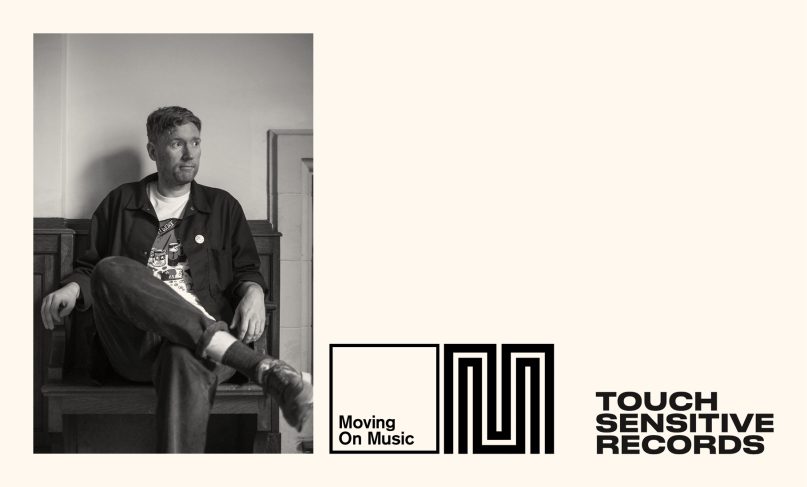
Exploring one of the most persistent questions facing independent musicians today: do artists still need record labels?
In this Cooler Clinic, Mark Reid offered a grounded, generous look at what labels, agents and promoters can actually do — and where artists may need to build their own infrastructure.
Notes on releases, touring, PR and artist development from IMC’s Cooler Clinic with Mark Reid (Touch Sensitive Records / Moving On Music)
Each month, Improvised Music Company hosts Cooler Clinic CPD sessions — practical conversations designed to support artists navigating sustainable creative careers. For the March 2026 session, we were joined by Mark Reid, founder of Belfast-based independent label Touch Sensitive Records and a member of the artist development and booking agency Middle Aisle, part of the long-running organisation Moving On Music.
Across the conversation, Reid spoke candidly about the realities of independent music infrastructure in 2026: the pressures on artists to do everything themselves, the changing role of record labels, the limits of streaming, and the importance of long-term artist development beyond simply releasing a record.
What emerged was less a defence of traditional music industry structures and more a nuanced conversation about support, relationships, sustainability, and momentum.
“The release should be the jumping-off point ”
One of the clearest themes throughout the session was that a release should not be viewed as the finish line.
Reflecting on the evolution of Touch Sensitive Records, Reid described a shift away from a more transactional model — simply putting records out into the world — towards a slower, more developmental approach centred on long-term artistic relationships.
“I think for me, if I’m working on a release, there’s probably about a year’s worth of work before, but I’m also thinking there’s a year’s worth of work after,” he said. “The record coming out itself should be the jumping-off point.”
That means considering:
- how a release connects to live activity
- where press and radio support might come from
- how audiences are built over time
- what opportunities the release might unlock next
Rather than viewing an album as a standalone product, Reid framed releases as part of a broader artistic trajectory.
Labels as infrastructure — not just distribution
A central question throughout the Clinic was: what does a label actually offer artists now?
For Reid, the answer extends beyond manufacturing or distribution. Smaller independent labels can still provide meaningful infrastructure, particularly for artists working without management or teams around them.
This may include:
- mastering and artwork support
- PR coordination
- distribution networks
- strategic guidance
- introductions and relationships
- emotional support and perspective
- artist development over multiple releases
Importantly, Reid argued that artists are increasingly being asked to perform too many roles simultaneously.
“We’re in a position where artists are having to be a bit of everything,” he said. “That’s not what they should be. They should just be artists.”
While DIY approaches can be empowering, he cautioned against the expectation that musicians must also become full-time marketers, publicists, agents and strategists in order to sustain a career.
Self-releasing is possible — but it still requires structure
Many musicians self-release projects, particularly within jazz and experimental music communities where label support can feel difficult to access.
Reid was careful not to dismiss self-releasing. Instead, he suggested that artists often underestimate the amount of infrastructure required around a release once the music itself is finished.
One recurring issue, he noted, is that artists sometimes reach the point where the music is finally online — Bandcamp, Spotify, physical copies (and often far too many get printed!) — and assume the process is complete.
In reality, that is often when the work begins.
He encouraged artists to think beyond upload platforms and consider:
- relationships with independent record shops
- sale-or-return distribution
- mailing lists and editorial coverage
- physical presentation and formats
- local promoters and communities
- sustained visibility after release week
Many artists create their own 'label' (and label identities) even while essentially self-releasing. In some cases, simply operating under a label name can create a useful sense of professionalism and distance when communicating with press, shops and industry contacts. Some reviewers will only review recordings from a 'label', hence the loophole.
PR is a relationship business
PR and publicity campaigns can be frustrating: expensive services that deliver little, the unpredictability of coverage, and the difficulty of gaining traction in crowded digital spaces.
But a particularly useful distinction emerged: good PR is not algorithmic.
That trust operates on multiple levels:
- journalists trusting publicists
- promoters trusting agents
- labels trusting artists
- audiences trusting curators and shops
For artists pitching labels, reviewers or radio, Reid emphasised the importance of specificity and research. Blanket emails sent to dozens of labels rarely work well. A more effective approach is often:
- identifying a small number of genuinely suitable labels
- understanding their catalogue and aesthetic
- sending a concise, focused pitch
- sharing a small number of strong tracks privately
“You can tell when someone has actually considered your label ”
The importance of international PR was noted, particularly for jazz artists working from Ireland. While Ireland has a vibrant scene, it remains a relatively small market, and international reviews or specialist press can significantly expand visibility and credibility.
At the same time, it was acknowledged that coverage alone does not necessarily translate into sales or sustainable careers. Sometimes a thoughtful write-up from a respected independent record shop can have greater practical impact than a feature in a major publication.
Streaming remains unresolved
Another major thread throughout the conversation was the uneasy position of streaming within contemporary music ecosystems.
Reid described streaming as both unavoidable and ethically fraught. While platforms such as Spotify offer visibility and accessibility, many artists remain uncomfortable with the economics underpinning the model.
“There doesn’t seem to be an alternative ”
Reid also expressed frustration that smaller artists and labels are often the ones expected to make principled stands around platform ethics.
Participants discussed:
- the collapse of meaningful streaming income for smaller artists
- the dominance of major label catalogues
- the ongoing importance of Bandcamp
- the rising cost of physical formats
- the possibility of using streaming selectively as a “taster” rather than hosting entire releases
It was acknowledged that physical formats themselves are increasingly becoming luxury objects. Vinyl, in particular, was described as culturally important but economically inaccessible for many younger listeners.
No definitive solution emerged — perhaps because none currently exists. Instead, the discussion reflected the contradictory reality many independent artists now inhabit: streaming is simultaneously insufficient, ethically problematic, and difficult to avoid.
Touring, teams and long-term momentum
The session also explored the relationship between releases and live strategy.
Reid described how his work with artists through Middle Aisle (Moving On Music's Booking Agency/Artist Development) often extends beyond booking gigs into broader developmental support:
- helping artists scale sustainably
- negotiating fees
- connecting artists with management or agents
- identifying suitable festival opportunities
- building professional teams gradually over time
Using artist RÓIS as an example, he described how developmental work can eventually lead artists beyond the original structures supporting them — something he sees not as failure, but as success.
In discussing touring, one important point emerged repeatedly: promoters and festivals are often more interested in strong live video footage than they are in studio recordings.
For artists planning releases, this means thinking holistically:
- live documentation
- touring
- visuals
- audience development
- press
- timing
All of these elements increasingly feed into one another.
A more sustainable ecosystem
What ultimately emerged from the Cooler Clinic was a portrait of independent music-making that feels less driven by singular breakthrough moments and more by ecosystems of trust, collaboration and long-term development.
The conversation resisted simplistic narratives about “making it” or industry success. Instead, it focused on sustainability: how artists can continue making ambitious work while navigating increasingly fragmented infrastructures.
Perhaps the clearest takeaway was that while technology has made releasing music easier than ever, meaningful artistic development still depends on people — listeners, collaborators, labels, promoters, publicists, record shops, festivals and communities — all working together to help music travel further than the room in which it was made.